Monday, December 14, 2015

Luke 1:39-45, (46-55)

Year C - Advent 4 or Needed Change 4
December 20, 2015


 Information and energy crosses placental boundaries in both directions. This exchange is greater than just a one-to-one correspondence. Past pregnancies affect future pregnancies through a lingering feedback loop.

Elizabeth hears; proto-John leaps.
Fetus John jumps; Elizabeth blesses.

Now, if we can become as attuned to the environment around us such compromised decisions as those in Paris around climate wouldn’t be needed. For one reason and another (read, Profit) our hearing is deficient.

The powerful from their Boardrooms fall the furthest when we all fall and, having forgotten how to deal with just enough, raise the loudest cry. The rich find the slops most disgusting.

Here between Gaudete Sunday and Christmas it will be important to see how we can deal with the boundaries between joy and downfall. Can you find that place that surrounds a dark night with a joy of creation and new creation? If not yet fully, might there be a step you can take in that direction? Blessings on actually taking it.


Thursday, December 10, 2015

Philippians 4:4-7

Year C - Advent 3 or Needed Change 3
December 13, 2015


Rejoicing and Thanksgiving as a way of life begin to show themselves in a sense of gentleness for self and others. Folks we meet on the outside and inside of our soul can be honored better when we are so full of thanks that we don’t have room for sorting them into whatever stereotypes we carry around with us. When rejoicing over the sheer gift of life we see how they add value to our life, even those for whom we can make no accounting.

It is this same rejoicing and thanksgiving that becomes a guard over our hearts when temptations come to give up on folks. In this way we can continue long enough to see connections and value below a first glance or impression, beyond a first betrayal.

“Holy Spirit and Fire” are not all that mysterious or alien. They do not require a theological degree. When rejoicing is present, so is Spirit. When thanksgiving is engaged, so is Fire. These allow new vision and kindness to enter our lives.

Yes the language of “Holy Spirit and Fire” is often of the harsh variety with winnowing forks and other images of a judgment leading to Hell.  But, no, Spirit teaches rejoicing in enough and Fire informs gentleness in relationships.

In these ways a great Mercy beyond understanding reveals itself in deeply appreciated Peace. 

= = = = = =

Somewhere in the midst of this posting the word “gaudy” kept wanting to sneak in. I finally looked it up and found Mirriam-Webster online indicates 2 definitions. The first is as an adjective describing something tastelessly ornamented with a first use in 1582 (no derivation given). The second is as a noun regarding a feast or entertainment dating only since 1651 and derived from the Latin, gaudium (joy). So how did that shift from negative to positive take place in a 70 period? What else today could use that sort of change and do you think it will it take as long or longer?


Wednesday, December 09, 2015

Isaiah 12

Year C - Advent 3 or Needed Change 3
December 13, 2015


Though angry, that anger morphed from sin to comfort.

Here is a point of practice for the rest of the church year — turning our periodic angers into compassion.

A key component of this practice is going to be a giving of thanks. Behind our surface thanks lies a cascade of ever deep thanks. It is so easy to stop at a first level of thankfulness and never find those next layers that can actually address anger at the same level of energy. Anger carries much energy with it. A little thanks stands no chance against it. An ever deepening thanks can not only match the energy level of anger but begin to put it in such a context that it begins to shrivel all on its own.

Thanks will not destroy anger for that would be fighting fire with fire. Rather thanks reveals anger to itself for the pitiable little thing it is and it begins to straighten up to join in a better way; thanks be to thanks.

With joy we draw water from a well of refreshment sometimes limited by the word salvation.


Tuesday, December 08, 2015

Zephaniah 3:14-20

Year C - Advent 3 or Needed Change 3
December 13, 2015


G*D is in our midst. 

That is enough without adding “warrior” imagery and “victory” claims. 

When this is enough we find that gladness is the result for we are renewed in love. This renewal both comes to us and flows from us in all directions.

Rather than being “taken away”, disaster is redefined. If disaster is not what we thought it was, we are open to the lame and outcasts entering a grand feast ahead of us. This will be easy for all concerned for being renewed in love is being restored to an honorable and honoring community.

So, sing aloud, sing with all your heart, sing! Judgment is passé when shame is not enforced. Again, offer thanks for an everyday life—a life with G*D and Neighb*r in the midst of your day.


Monday, December 07, 2015

Luke 3:7-18

Year C - Advent 3 or Needed Change 3
December 13, 2015


We are all too aware of our propensity to promise more than we can deliver. We give in all too easily to a temptation to say just a little more than we really know. Our best is seldom achieved.

No wonder that when instructed to bear fruits worthy of our intentions we moan, “What then should we do?”

If only our required actions came with a few more instructions that would be foolproof in their clarity. However every pre-recorded attempt to get Tab A into Slot B fails to account for one more context in which even that simple instruction can go astray.

So it is back to the basics of relationships rather than technology—Sharing, Enough, and Kindness.

This is more than salvation by some external sign. This gets at the inward dimension of life. This is a hint toward Spirit and Fire. Blessings on every practice of sharing, knowing enough, and expressing kindness. 


Thursday, December 03, 2015

Philippians 1:3-11

Year C - Advent 2 or Needed Change 2
December 6, 2015


The next baptism you do, work this prayer from verses 9-11 into the action:
May your love overflow, more and more, with experience and wisdom to help you see a next best option of solidarity with mercy. Such abundance produces a harvest of community even as Jesus pointed to a partnership with creation and G*D. Amen.

Such a blessing aids us in thinking about our life and our lives together. It gives confidence that our journey well-begun in expressed goodness will continue lively past any of our current boundaries.

Advent 2: a study on an intentional way toward a preferred future.


Wednesday, December 02, 2015

Luke 1:68-79

Year C - Advent 2 or Needed Change 2
December 6, 2015


Try switching the language in verses 69-70: “G*D has raised up a mighty “prophet” for us in the house of David, as he spoke through the mouth of “saviors” from of old...”

How does that sit? Is it informing about our current role as Advent People?

Want to be engaged in mercy? Be a strong prophet! It is, and always has been, our leverage.

You, yes, you, will be called a prophet of G*D preparing another way to reveal a tender and strong mercy of forgiveness and forgiveness of mercy (be careful how you read that last phrase as it is all to easy to mis-take it).

Prophets give heart/light to those deathly afraid in the dark. Prophets paint in the dark with luminescent paint. Gentle your eyes to catch the glow of hope in the yet unseen.


Tuesday, December 01, 2015

Malachi 3:1-4

Year C - Advent 2 or Needed Change 2
December 6, 2015


A word to those currently occupying Temple Space: “Suddenly you are not alone. You who thought yourselves alone will no longer be able to stand. All that you hid away, will be revealed. This revealing will require great refining heat removing all the extra you had counted on.”

In place of contrived confessions will come quiet walks and talks, as if in a wild garden of chaotic strange attractors. The loves and lives exchanged there will be deeply pleasing, in contrast to our current competition designed for winners divided from losers. in former years everyone won and lost together—this is to say won through together.

Those who remember their past lives as messengers bringing to consciousness and action the professed, but not desired, desires of Temple Managers, are invited to continue their ancient arts in the present. By whatever means are available in this time, cast light into the latest formulations of contrived meaning. Show it for its lack of graceful abundance. This grace will prevail.


Monday, November 30, 2015

Luke 21:25-36

Year C - Advent 2 or Needed Change 2
December 6, 2015


It was definitely not the best of times when Tiberius modeled reigning for Pontius Pilate, Herod/Philip/Trachonitis/Lysanias, and Annas/Caiaphas. Into another of the worst times came a word to John Zechariahsen.

This word was an action, baptism. This action spoke of repentance and forgiveness. This, also, was another season for these to be brought to the fore. Prophet after prophet acted these out in various ways in various times.

Again it was ruler contesting against prophet. Later we will hear how the prophet again lost; and again won.

So we look at today’s rulers and today’s prophets. Listen to one of today’s prophets organizing in his way and time: The new fusion politics.


Friday, November 27, 2015

1 Thessalonians 3:9-13

Year C - Advent 1 or Needed Change 1
November 29, 2015


What joy! I get to restore whatever is lacking in your faith.

That seems like a strange construct but it is the context for the blessing with which this section ends.

May it be that any and every heart be strengthened in living meaningfully, even if that is done without my direct engagement with that meaning.

On this first Sunday of the modern 4-Sunday Advent we are alert (Luke) to fulfilled justice (Jeremiah) through humble and steadfast love (Psalm) that we might abound in love for one another (1 Thessalonians).


Wednesday, November 25, 2015

Psalm 25:1-10

Year C - Advent 1 or Needed Change 1
November 29, 2015


“Steadfast love” is paralleled with both ”mercy” and “faithfulness”. This parallelism brings mercy and faithfulness together as a reflective pair.

A basic question about the quality of steadfast love is clarified when we are heard to ask, “Do I trust mercy to be my basic response to the actions of others?” Like it is clarified by the question, “Do I trust I will be treated mercifully when I have gone astray?”

If both or either response is, “No”, there is more work to be done on loving G*D and loving Neighb*r as Y*urself.

If both responses are, “Yes”, there is more work to be done on loving G*D and loving Neighb*r as Y*urself.

These are paths never traveled once. Like establishing habits, we trace them again and again as we enter new territory. It might be said that we must trace them again and again if we are to enter new territory.

A part of the reason we need to retrace them is that we are walking in partnership with G*D and one another. This is different than establishing a new personal habit in 21 days. It means that each of us walking together on a path are walking together, not marching, and we need to find out again what steadfast love means in each new context.

No amount of warning or promise will see us through all the adjustments needed to walk together over the long haul. Behind both warning and promise is something deeper than surface behavior and morality. That something deeper is sometimes called “steadfast love” or “mercy” or “faithfulness”. These go way beyond accumulating stars for our golden crown or being scared straight. They exemplify a creative partnership working to be better together.


Tuesday, November 24, 2015

Jeremiah 33:14-16

Year C - Advent 1 or Needed Change 1
November 29, 2015


All the evidence is that we are in the midst of a surly day.

We look for evidence that a day is surely coming when the promise of justice and righteousness will spread across the land.

Anyone holding their breath for a transition from surly to surely may be well advised to temper that action. Not knowing a kairotic time when we see it easily leads us to our base-line optimism or pessimism but not to an acceptance of our responsibility and accountability to partner with all would be about doing justice through the mechanism of mercy or moderating righteousness by way of universal assurance of belovedness, not a particular morality.

So far we have heard warning and promise. This is similar to what we all need to progress to a next plateau in our life’s journey—support and correction. It is easy to get trapped by either end of these paradoxical polarities.

Given this first Sunday of a new attempt to be more merciful, what needs to be put in place in the next 12 months that we will feel we have moved one step closer to our goal and so can build on that the first Sunday of Advent next year?


Luke 21:25-36

Year C - Advent 1 or Needed Change 1
November 29, 2015


The "powers of the heavens" is old speak for Trouble-In-Our-Time-and-Space. If you attend at all to today’s media you will see “news” as a form of advertising trying to push you toward a knee-jerk response. It doesn’t matter if the fear is underarm odor, Syrian immigrants (simply the latest in a long line), or passivity toward war—that which is passed off as common knowledge has an agenda.

The Scriptures can be read through the same advertising eye. Look, a fig tree means the end is nigh. Look, new immigrants means the end is nigh. Look, a new enemy (always a terrorist) means the end is nigh. Anywhere you look you can find a reason to absolutely know the end is nigh.

OK. So what is new. Those who recognize that every generation has its travail are better positioned to not have their hearts weighed down with the worries of the day and to be able to avoid the traps trying to trick us into giving up on the goodness of creation or subtly pushing us toward a next war and war after that.

As we come to the edge of a new year our desire is to stand, simply stand, in the most meaningful place we can. For followers of Jesus this will most likely be at the juncture of the 3 Abrahamic traditions—Mercy.

What would it mean to stand with those of the Jewish and Muslim traditions to proclaim 5 or 6 times a day (or constantly) that G*D is merciful and to honor G*D with our whole being is to honor our Neighb*rs with that same mercy?

Blessings on starting our next year with this question of standing (a judicial category) that we might be able to measure our movement toward Mercy by this time next year.


Friday, November 20, 2015

Revelation 1:4b-8

Year B - Reign of Christ or Evaluation Sunday
November 22, 2015


One redeeming phrase here is: “a kingdom of priests”. This is like Meister Eckhart stating that the lowest person is included in those acknowledged to be rulers. When everyone is a ruler or a priest all the old categories fly out the door.

Of course we will find some distinguishing mark whereby we can discriminate against someone else so we are not the lowest. Nonetheless, this kind of including everyone in can help us identify both our personal prejudice and our corporate discrimination.

Remember even those who did Jesus in by word or deed are able to see a new way coming and join in. Conversion is an ever-present possibility. Obversely, everyone will have something to lose when a new way of being with one another enters the scene. The joy of conversion and the wail of loss will be equally evident, someday.

Until then claim your priesthood and forgive freely. Until then weep that you have turned your back on your priestly comrades and withheld your forgiveness. May we be at a better place as we evaluate how far we have come by this time next year.


1 Timothy 2:1-8

Year B - Thanksgiving
November 22, 2015


We do like our orderliness. The Love Prevails group has even found that standing off to the side and holding a sign is seen by some as disorderly. Well, OK, the signs have disordered a mind or two as they call for change. But even the mildest of suggestions that things might be different will eventually upset the status quo.

This appeal to orderliness is particularly evident when a plea is made to pray for everyone and have that immediately followed by only one example: for kings that we might lead a quiet, peaceable life exemplified by surface godliness and dignity and their attendant passivity of no anger or argument.

This feels considerably different than an earlier appeal to strive for the presence of G*D (mercy). The status quo and mercy are much like oil and water, difficult to keep together without separating.

It is unfortunate that this is the beginning appeal (“First of all”). It really has nowhere to go from there. In particular, the only thanksgiving coming from this is for those already in power. A larger picture is needed for larger thanksgiving.


Psalm 132:1-12

Year B - Reign of Christ or Evaluation Sunday
November 22, 2015


On this last Sunday of the Church Year our goal is revealed as Kingship. Jesus becomes the latest king in the line of David. This David claimed to have labored unceasingly, no slumbering, to get a throne for G*D and (well, maybe a little) for himself. Kings, after all, can use any G*D available to solidify their grasp on the reins of power.

Against this background what are we to do with the continuing drop in the polls regarding the church and church leaders. Once upon a time it and they were near the top—now not so much (see: http://www.gallup.com/poll/166298/honesty-ethics-rating-clergy-slides-new-low.aspx).

At the least, if power/kingship is going to continue to be the goal for the church, Advent better start us on a whole new track as the old one isn’t making it


Psalm 126

Year B - Thanksgiving
November 22, 2015


Do we get more thanks out of a restored past or a breaking future?

Somehow we seem to be more thankful after a loss than with something unexpected and new. There is a longer lasting thankfulness to have a pain removed than with the latest toy soon outlasting its novelty.

Here, too, we have a model of weeping first; joy second. This sounds very much like sinner first; heaven last.

Do consider a concept of “enough” being our measuring spot for thanksgiving. In this way it is not just prayer that is to be constant, but thanksgiving. In fact it is helpful to move prayer out of petition and into thanks so you can’t say “prayer” without saying “thanks”.

Since we have been weeping as we sow seeds for the next generations, do begin shifting that into what you are thankful for—an opportunity to sow and weep. Waiting for actual sheaves and not already anticipating them (virtual sheaves) is a game not worth the playing.


Wednesday, November 18, 2015

Joel 2:21-27

Year B - Thanksgiving
November 22, 2015


Thanksgiving casts out shame.

Basic dirt knows this much. Why do we keep forgetting?

Those claiming to be created from such dusty old dust might better remember this than we do. It seems we have to keep learning these things from brother and sister animal and sister and brother plant.

So, Lift up your head, O Gates; Thanksgiving enters. Lift up your head, O Gates; Shame leaves.

And, amazingly, when they meet in the Gate both are transformed. Thanksgiving is humbled; Shame is assured.

Be glad and rejoice when the proud do not stomp the vulnerable into the ground. Be glad and rejoice when the glutton does not explode over everyone else.

Give thanks that we have learned moderation even in moderation. Now we are getting somewhere.


2 Samuel 23:1-7

Year B - Reign of Christ or Evaluation Sunday
November 22, 2015


Justice is justice, whether seen as engaging a god or a G*D. When justice happens light breaks through and reflects off the water. Wear your sunglasses and put on your suntan lotion for double light will wear you out without them.

When we are worn out, light may appear just but just blinds us to basic common good for the next generation, much less seven down the way. Cultural discrimination masquerading as justice raises its poisonous head to bite our heel as we limp around attractive altars.

The strong light of justice is a harsh task-mistress as she asks questions of our actions and not just those of others. The Ash Rule applies here, You shall be consumed as you have consumed.

A last Sunday in Pentecost is a last chance to share wonders, not to enshrine them.


John 18:33-37

Year B - Reign of Christ or Evaluation Sunday
November 22, 2015


The Examiner strides into Headquarters and calls for Jesus Kafka. Gregor the Prisoner is asked his status and asks in return, “Where’d you get that question, I was just looking at another day in the Office of Healing.”

“What have you done?” leaves Jesus befuddled. “Am I to defend myself? Accuse myself? Come up with one more trick response? This must be a dream. I’m not from this crazy place.”

“Ah, so you do have Status! You have done!”

“If you say so. Testifying time! In the end, you don’t exist, Doorkeeper, but the Door does. Think I’ll walk through. See you on the other side if you have courage to follow.”

This is a day of evaluation. We’ve had a year since last Advent. Are we still at the same impasse? How would you apply your best learning from the year to this scene?


Matthew 6:24-34

Year B - Thanksgiving
November 22, 2015


There are ever so many worries, real and imagined, that crop up on a moment-to-moment basis. Horror movies are a perennial best seller. We love to scare ourselves and those around us.

It is difficult to keep a focus on the goodness of creation in the midst of so many pieces of the sky falling all about us. Well, at least they feel like sky. We have met Henny Penny and she be us.

On this last Sunday of the church year we could go the “Christ the King” route. The difficulty here is left over from last Advent. What have we learned through the course of the year? Is it our king trumps your king? Is is allegiance to some a priori truth? Is it division into those who hear the voice in my head and those who don’t?

My hope is that we have set our sights a bit higher, the Presence or the Freedom of G*D. In this all the rest finds its way. We can do with enough. We know our connection with the birds of the air and the flowers of the field.

How to wrap up the year? One less worry than last year at this time. Perhaps it is not much, but it is priceless.


Thursday, November 12, 2015

Hebrews 10:1-14, (15-18), 19-25

Year B - Pentecost +25 or Energy to Witness 25
November 15, 2015


“I sacrificed myself for the sins of others and am waiting for my enemies to be abased by my feet, abused by my followers.” Does this sound like Jesus?

If G*D is planning to forgive us, as images of G*D we are to forgive others and invite (provoke) them to love and good deeds. This critical middle section dare not be left out. Without it we move from the postulate that Jesus is qualitatively different than anyone else (not exactly human) to a self-centered group of the “sanctified” separate from the world (our sisters and brothers).

If we are going to be followers of one who removes sin from the table and guilt from our conversation we need to understand our renunciation of reveling in victory is not a technique of humbly being saved but deep, deep habits of encouraging current friend and foe alike and receiving their encouragement of us.

Here at the end of Pentecost we are tempted to find ourselves in another locked room. This time not out of fear that we will be done in but in rejoicing that others will become our footstool. This turn of events might be called an anti-Pentecost that comes back off the streets, having shared wonders, and waiting for all those out there to be blown to the babel-ing winds.

This seems a strange and bitter end to the hope, mercy, joy, and surprise of a first Pentecost.


Wednesday, November 11, 2015

1 Samuel 2:1-10

Year B - Pentecost +25 or Energy to Witness 25
November 15, 2015


The lead-up to this passage is Hannah speaking out of her anxiety and vexation, her implied yelling at G*D that goes beyond the recorded plea and bargaining in Chapter 1. This is important as it gets carried through to a seeming resolution of her angst.

Being victorious seems to be all the sweeter if it can be pushed in an adversary’s face. Somehow we don’t count victories in anything other than war and triumphalist terms. So what might we learn from Hannah about what not to do when thankful for one mercy or another? Would Hannah be a leader in a Truth and Reconciliation process?

This song runs through Miriam, Psalms, and Mary as well as every apocalyptic vision. Hooray, I got mine! Too bad about you and you and you!

Next week is the final Sunday of this cycle of the lectionary. Remember again what you had in mind last Advent and through each of the seasons since. Is this what we have come to over a year of supposed growth toward deeper outward signs and inward grace? If so, no wonder some “Christ the King” Sunday rings hollow and no wonder another Advent is required on the great Theosis Wheel.


Tuesday, November 10, 2015

1 Samuel 1:4-20

Year B - Pentecost +25 or Energy to Witness 25
November 15, 2015


What would we finally hear if you spoke out of your “anxiety and vexation”?

Now that you have that clear, speak. After speaking, get down to “knowing”, doing the deed that leads to fulfillment.

What causes “the Lord” to remember? Is it in some plan that remembrance take place at some future time? Is it the intercession of an official priest? Is it how heart-felt your plea? Is it presenting yourself before “the Lord” before enough rules were in place to have direct contact with that “Lord” rather than work through your patri-arch who thinks he’s worth 10 of what you desire?

This is only one example of having to force a “Lord’s” hand. Are you still pining and waiting and resigned or exercised enough to push past any current revelation or remembered plan? Is partnership with G*D still an option for you?


Monday, November 09, 2015

Mark 12:13:1-8

Year B - Pentecost +25 or Energy to Witness 25
November 15, 2015


D: Look what large buildings they now have that will soon be ours!

J: Wrong perspective the buildings will be not be theirs or yours.

D: Well, then, when is that going to happen?—that these walls come tumbling down?

J: Oh no you don’t! Prediction is a fool’s game. Don’t be taken in by rumors, no matter how common-sensical they appear on the surface. Such speculation only gets you sound-and-fury. 

[pause]

But you might find the beginning of wisdom in recognizing there is nothing new under the sun and there is no good reason why a creation birthed in “It is good” should have to come to an unruly end instead of a peaceful and satisfied sigh.

D: Is that orthodox? 

J: Of course it is. Those who have eyes will see such blessing in the midst of every confusion and pull back every tangled web woven to deceive you into thinking wars are real and mercy is not. Watch, attend, see, act, grow.


Thursday, November 05, 2015

Hebrews 9:24-28

Year B - Pentecost +24 or Energy to Witness 24
November 8, 2015

Hebrews 9:24-28

Let's see, a high-priest model Jesus is unique. He only shows up once to take a picture of us back to G*D in heaven, a mere copy of our true image but what can be beamed up.

But he will come a second time, not to deal with sin that a Holy Spirit will redefine for us in such a way that we will see how wrong we were about sin. But Jesus will come to give assurance that those who have redefined sin are on a helpful tack.

What we don't hear about are all the other sightings that have been made along the way. Perhaps, even some that you have had.

This modeling doesn't square with our experience. Neither high priest or ascension stand up to the bodhisattva we have named Jesus.

Wednesday, November 04, 2015

Psalm 127


Year B - Pentecost +24 or Energy to Witness 24
November 8, 2015

Psalm 127

How many houses have come and gone? How many cities? Even the most fabled fall with some never to be found again. We might ask where the "Lord" has been.

Who among us hasn't questioned our getting up early and a lack of sleep? Again a question about where the "Lord" has been. Has the Sabbath been a Sabbath for the "Lord" and a day of rest has lasted as long as any metaphoric "Day" lasts in biblical apocalyptic language?

We finally get to our work of raising up power to overtake the power of others and establish our "heritage". Wombs are a work place for replicating soldiers all too soon gone. So we need a first quiver full of "arrows" and then a second and third. No wonder a poor womb begins to weep.

Widows without protection become all too common as those protectors are siphoned off into one quiver or another and the widow quivers in their loss.

Oh, yes, happy man; sad woman.

So, how do we redefine power and "quivers" and "arrows" other than how it affects wombs and widows?

Time for a new song.

Tuesday, November 03, 2015

Ruth 3:1-5; 4:13-17


Year B - Pentecost +24 or Energy to Witness 24
November 8, 2015

Ruth 3:1-5; 4:13-17

David's ancestress, Ruth, seductress of Boaz, is alive and well in David's DNA (see Bathsheba).

Naomi plays the role of Snake-in-the-garden and Ruth is Eve with with Boaz getting second billing as Adam. Each played their part and we are where we are. Each of us continue playing our parts as we carry these same multiple personalities within us.

Blessings on breaking your play's fourth wall and carrying your role into the audience of reality, there to shift, modify, or re-write your part.

- - - - - - -

How is widow Naomi the same and different from the unnamed widow with a mite or two?
 

Monday, November 02, 2015

Mark 12:38-44


Year B - Pentecost +24 or Energy to Witness 24
November 8, 2015


After engaging antagonistic Sadducees and Pharisees and technocratic Scribes we come to a fourth story where the antagonist is all-of-the-others rolled into one--institutional religion using fear tactics to cow any unauthorized variant back into line. As a result, every part of the religious structure points to Rome, the Temple, or Fundamentalist teaching, depending on one's focus, but never to real lives of widows, orphans, or aliens.
 
For example, having just heard of a scribe's hearing a second commandment to the Shema--love your Neighb*r is contrasted with an actual neighborhood widow and comes up lacking when the institution requires her last two pennies.
 
Yes, Jesus' observation makes a dandy Pledge Drive periscope. Even though an impetus for giving is present, making a moral out of unequal examples puts a burden on the poor by getting mixed up about amounts instead of just access. As a result, those putting in much are categorizable as wicked devourers of widow's resources. It is as if they said, "Try matching this amount of giving. What, you've given your all and don't have anything left? Too bad, we still have our surplus with which to call the shots!"
 
How do you read this sequence of stories?
 
- - - - - -
 
Ahh, the honored
respectfully greeted
given third-row-center seating
unaware of the back of the balcony
able to ask non-questions
and baffled by real responses
freebie perks reveal
a fragile partnership
 

Thursday, October 29, 2015

Hebrews 9:11-15

Year B - Pentecost +23 or Energy to Witness 23
November 1, 2015


So far there isn’t anything that isn’t of “this creation”. Multiverses are still of this creation or we wouldn’t know of them. So, no perfect tent, no perfect G*D, no perfect me (or you). Once-and-for-all is only a place of death.

Yes, may our conscience and consciousness be engaged, but for their own sake. If there is going to be any new covenant, it is going to take all of us to lift it out of its manger, change its diaper, and nurse it through any number of growing pains. Until we are able to promise one another some common good in the here-and-now, eternal “inheritance” will just have to wait.


Wednesday, October 28, 2015

Psalm 146

Year B - Pentecost +23 or Energy to Witness 23
November 1, 2015


It is satisfying to be thankful for a long vision.
All the usual power sources of politics, military, and economics eventually disappoint.
Pleased are those who know the limits of help and the depths of hope.
Then, whenever a taste of justice appears extravagant rejoicing can go on and on
   for an ability to breathe expands and strangers, orphans and widows can dance.
Those who would squash opportunities for others to extent their own benefit
   will find their graves danced upon.
Generation after generation the presence of constraint and sharing cycle through—
   call it G*D or Al or anything else, these abide to be chosen between.


Tuesday, October 27, 2015

Ruth 1:1-18

Year B - Pentecost +23 or Energy to Witness 23
November 1, 2015


It is difficult to go back to a place where your place is known by everyone else and that place will become your limit. It is doubly difficult to go there with only best wishes that your well-wisher’s best will go with you.

This is the choice set before Ruth and Orpah—continue into a known future (with well-wishings) or continue into an unknown future (with a well-wisher).

I expect each of us have at times chosen Orpah’s choice. Other times we have chosen Ruth’s choice. We know one outcome and can only wonder about the unspoken Sophie’s choices that are engaged and influence which way we go. It would be interesting to listen in to the PTS reports of both Orpah and Ruth—any novelists out there needing a next challenge?

Blessings on you as you not only deal with loving G*D and Neighb*r but doing so knowing full well the realities of living in a setting not of your own making where limits not only chafe but are hurtful.


Monday, October 26, 2015

Mark 12:38-44

Year B - Pentecost +23 or Energy to Witness 23
November 1, 2015


There is no primary. This gets us into chicken and egg conundrums. There are counter-balancing rhythms and relationships. 

The scribe concludes that loving G*D and Neighb*r are more important than temple sacrifices. Jesus does not say, “Then come; follow me.” He says, “You are not far from the presence of G*D.” Can the scribe go back to being a scribe that prescribes temple sacrifices? How long before good old cognitive dissonance sets in and he becomes a temple alumni? Does that mean that honest questions put one in the presence of G*D? 

No one may have asked Jesus additional questions beyond antagonistic questioning by Pharisees and Sadducees and sympathetic questioning by a scribe, but there are questions to be asked. In the next verses, Jesus takes up an antagonistic question back at temple leaders before ending with an ambivalent observation about a widow’s mite.

Pharisees, Sadducees, scribes, widows. Around and around we go with paradigms, memes, experiences, and more. None of these define Jesus’ assurance, defiance, or growth in the intersection between religion and G*D. Each is a response to a context and a person. It might be helpful here to remember Matthew 13:52 where we are reminded that the head of a household (female?) brings old and new things forth from their treasure chest to deal with the particulars of the moment.

Who has modeled for you the bringing together of different pieces of information (our life) to apply to a present situation? They are a saint for us. May you so model for others.


Thursday, October 22, 2015

Hebrews 7:23-28

Year B - Pentecost +22 or Energy to Witness 22
October 25, 2015


There is a choice of reasons for seeing Jesus as a High Priest.

1) “Because he continues forever.” This puts projection before theology. Our desire to be eternally cared for becomes the justification for a Jesus eternal in the heavens, director of sin and repentance.

2) “He always lives to make intercession.” Even though the word “always” sounds as if this is closely related to 1), it needs an understanding that this purported living was in the past and should be noted as “lived”—he lived to make intercession. 

This, of course, leads to a question about intercession. It is all too easy to slide into some ideal that never intersects with entropy. The intercession here is not some Promethean intercession for humanity's benefit but a critical and intentional engagement with real people’s lives in present moments of the same. Another image that might be helpful here is that of a catalytic conversion—he lived to engage real people’s blockages, reveal them as interconnected with the rest of life (not unique), and carrying gifts after being embraced (it might be said that he lived to embrace and release).

The contingency of eternity is not a source of being honored, but the engagement within time is.


Wednesday, October 21, 2015

Psalm 34:1-8, (19-22)

Year B - Pentecost +22 or Energy to Witness 22
October 25, 2015


Our particular moment(s) of conversion (vs 6) from perceived affliction or despair to meaning or happiness shifts our engagement with ourself and all within our context (as well as our context itself).

At base the resultant standing-place is in verse 19: “Many are the afflictions of the righteous, but G*D rescues them from them all.”

There are significant questions about some “live happily ever after” expectations of no more brokenness as well as no more condemnation and exile of the latest version of wickedness.

It is important to reflect on the concept or experience of “rescue”. This has an initial sense of passivity. Rescue is something that happens to me. I just need to find the right button (praise? lament? countervailing power?) and I’m rescued.

Try replacing “rescue” with “reorientation” or “responsibility”. When there is a reorientation we can accept our responsibility to participate with the mystery of universal rescue—our own, our enemies, our G*D's. This universal rescue is a precursor to a later series of reorientations toward a responsible love of G*D, self, neighbor, one another, and enemy.

Without reorienting “rescue” it remains a dualistic word that unnecessarily privileges rescuers and divides one aspect of creation from another.


Tuesday, October 20, 2015

Job 42:1-6, 10-17

Year B - Pentecost +22 or Energy to Witness 22
October 25, 2015


This passage cannot be understood without its middle section. With this returned to unity there are 3 points to be made.

1) Wherein does seeing G*D lead to the despising of self and repentance unto dust and ashes? How has an option for rejoicing at a new meeting and opportunity for partnership been siphoned off? When our eyes, ears, and other senses are enlivened we have a choice about our response. As “glory” beyond our imagining is engaged, questions need to be raised about the role of repentance as an initial action or one subsequent to thanks or gratitude and without ashes.
2) Job kept faith with G*D by anticipating justification (if not assurance or grace). Job’s “friends”, Eliphaz, bildad, and Zophar placed G*D in an independent relationship from when “smiting at will” is an enforcement tool.
     Hear clearly that Job’s “repentance” was not to stay in the ashes but to “pray” for his “enemies” and as a governor on G*D’s wrath.
     It is recorded that “Job’s prayer” was accepted by G*D and Job’s future well-being is directly related to his prayer for his “frenemies”.
     Was his prayer one of forgiveness of others, was it intercessory toward a particular change in them? Was it a prayer toward G*D to not do an eye-for-an-eye thing (after all this was all a test of Job and not a test for Eliphaz, Bildad, and Zophar).
3) After being “restored” to a state of abundance/prosperity, Job broke ranks with the economic tradition of male privilege—Job’s daughters inherit along with their brothers. It is this sort of openness that left Job “full of days” or “days of fullness”.

Now what will fill your days—”ashes” or “prayer”? May this question haunt you to a point of choice to change our culture’s limitation on a freedom of G*D and self to intentionally partner in the midst of this creation.


Monday, October 19, 2015

Mark 10:46-52

Year B - Pentecost +22 or Energy to Witness 22
October 25, 2015


“What do you want me to do for you?” This question was asked last week of conniving disciples. This week it is asked of a blind man. 

This is a question we might begin asking one another in a congregation or community. This is a far different matter than the political season statement, “Here’s what I can do for you.”

There is a communal lectio divina process that reads a scripture passage a couple of times listening for different words or phrases or evocative images or sensual engagement or other non-verbal way of entering the land of story. Eventually what is listened for is a shift in one’s own life that is reported. At the end each person “Prays” for the intention to shift mentioned by the person on their right and has their own intention “Prayed” for by the person on their left. This honoring of an intention/vision other than one’s own opens the group to listen together more wholly for any question they might hold in common.

Now comes the question to each of us, “What do you want your religious/spiritual tradition to do for you?” It may be something quite doable. It may be something unattainable as it still has too narrow a focus. Either way there is a clarity available about what we might partner together to be about and what needs to be left for a season or another group to address. This clarity is a clearing away of what stands between our realities and our vision of them. So much can get in the way and block what might otherwise be seen: so much privilege, so many tapes, such a load of burdens, etc.

May you continue to call out for mercy and continue to respond to calls for mercy.


Thursday, October 15, 2015

Hebrews 5:1-10

Year B - Pentecost +21 or Energy to Witness 21
October 18, 2015


To be subject to “weakness” is one thing. To be aware of being so subject, is quite another.

To claim Jesus is improved or justified by being in some spiritual line of Melchizedek is but a poor repeat of James and John trying to get an endorsement of their special importance.

This line of argument may have swayed some in the past but each year it carries less and less persuasive weight. In and of itself, along with too many dollars for a cup of coffee, you can still get a cup of coffee.

The same holds true of our perfection being subject to someone else’s perfection. All in all, I still lean toward leaving Hebrews out of the lectionary.

If pushed to comment here, I would return to the weakness image to note that our experience does sensitize us to others who have had similar experiences. Empathy is a valued gift. None of us, though, can experience enough to be all things to all people and so the importance of interdependence rises.

Let me know what use you have for a sinless high priest.


Wednesday, October 14, 2015

Psalm 104:1-9,24, 35c

Year B - Pentecost +21 or Energy to Witness 21
October 18, 2015


“You stretch out the heavens like a tent.”

I have just begun a half-time position as pastor of a congregation that has been declining in numbers. Those left have a commitment to the community. For decades homeless people have slept under the large bushes in front of the building. This past summer the church became a bit more proactive and, with agreed upon rules, allowed tenting in their “Grace Space”. The tents go up at twilight and are down by 8 am.

As might be easily imagined a complaint made its way to the city authorities. Without talking with us they sent a letter to cease and desist, claiming we fell under their campground ordinance. Well, we are still talking without trying to further inflame the situation with a confrontation of moral vs legal arguments.

This has made me sensitive to the ancient tenting tradition of YHWH during and after the Exodus. Now, seeing the tent image used to include all of creation, it is important to again set boundaries that the indigent/homeless are not flooded out by polite society and made further invisible.

The county has a contract with a local crematorium and they have gone above and beyond the call of duty to contact us about doing memorial services for the homeless that they cremate. We have agreed and our first memorial service is tomorrow. Word has gone out through the homeless community and we wait to see what the response will be.

And so, a tent to cover all the creatures of the earth. Under this tent there is no lording it over others. Under this tent we take our moment and add it to the moments of others to honor those who have gone before and to pass on a healthy earth to those who follow after. Under this tent we live, and we move, and we share our being.


Tuesday, October 13, 2015

Job 38:1-7, (34-41)

Year B - Pentecost +21 or Energy to Witness 21
October 18, 2015


Then “The Lord” responded to Job from behind a curtain, “Demands for Justification fall on deaf ears for there is no excuse, read your Kafka again. What is available to you is a Presence of Assurance that you are, no matter what, dealing with real gifts, real loss, real life. Buck up kid, I had to come to this a long time ago and you are well on your way. Let’s talk soon so I can get past my present boasting and you can make it beyond yesterday. How about supper in the cool of this evening?”

Monday, October 12, 2015

Mark 10:35-45

Year B - Pentecost +21 or Energy to Witness 21
October 18, 2015


Jesus has been talking about heading to Jerusalem to die and rise up.

[Hmmm. How might we play this to our advantage?]

[Ahhh, yes, become Chief of Staff and Press Secretary for all the judging that will be going on!]

“Hey, Jesus, how about your loyalest Disciples helping out. I’m sure you have seen our effectiveness here on earth and, like you, will only improve in times to come.”

“I’m sure,” said Jesus, “that you will be just as wise then as your are now. Unfortunately for y’all, everyone, including me, has to serve somebody and that decision is above my pay grade.”

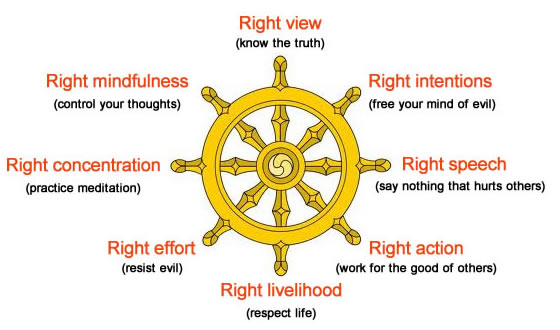
Jesus continued, “I do have an idea about how you might increase the possibility of your request. Remember our friend, Buddha, and his eight paths leading through attachment to fantasies? Well my version of that is ‘service’ or “giving of yourself” with a sense of joy in the doing without tying it to cause and effect.”


And James and John, like a rich guy before them, went sorrowing away to make amends with their fellow disciples and to practice what Jesus preached and lived. Having their vision refocused they could go on to tell a story of, present mercy, new sight, and their identification with Bartimaeus in a story for next week.


Thursday, October 08, 2015

Hebrews 4:12-16

Year B - Pentecost +20 or Energy to Witness 20
October 11, 2015


To return to the temptation to privilege we have verse 16: “Let us therefore approach the throne of grace with boldness, so that we may receive mercy and find grace to help in time of need.”

This is quite the transaction. What happens to mercy and grace should we not approach some alien throne? Would they then be absent from our life? Well, no.

This whole understanding of a universalized grace and a solidarity in mercy casts doubt upon the whole preceding model of a duality causing sword and subsequent salving.

Try this: “Let us join together, whether boldly or shyly, to reveal mercy and grace in good times and ill.” If there is something here, the time to take a step toward another is now, not when some condition is met.

Rejoice! Enjoy! Every little thing is going to be alright (and already is).


Wednesday, October 07, 2015

Psalm 22:1-15

Year B - Pentecost +20 or Energy to Witness 20
October 11, 2015

Psalm 22:1-15

Forsaken . . .
Yet . . .


This is the great poem of every age.

We search for answers only to find a response of silence. We yearn for rest so energetically that we miss present comforts.

There is no great moral here. Do your best to find this poem at work in your life this day:
Forsaken . . .
Yet . . .

Tuesday, October 06, 2015

Job 23:1-9, 16-17

Year B - Pentecost +20 or Energy to Witness 20
October 11, 2015

Job 23:1-9, 16-17

Our complaint is still a bitter one. We so desire to bring our life and circumstance to a resolution and there is no court available for us to do that. We can’t do it internally for we know we are just fooling ourselves one more time as evidenced by repeating the same old tapes. We can’t do it externally for everyone is trying to do the same and nowhere is there a place where our common desires and willingness to be judged can be matched up—always power is by definition unequal.

Our bitterness is a desire to be justified and not being able to see where a hearing could provide an outcome we could live with. All we can find is a continuation of I win/You lose and its complement of I lose/You win. This will never do.

If only there wasn’t a sense of dread about this eternally being the case. Where can the Gordian Knot of everyday life be undone without a cheating blade?

We cry out to banish a darkness that covers our face, clouds our countenance, and leaves us feeling for maze walls even if they lead no where. Something more amazing is needed. There is no escaping suffering through any judgment. Some semblance of assurance or a helpful path/way will assuage our angst for awhile, but even here darkness has a duration that outlasts our willingness to await. Pressure to be about regular life stirs us up to keep us from knowing there is no such thing as regular life, only this one precious chance never fully grounded and ever bubbling with future’s life.

We can all join in Job’s wail. May we also be able to find our search for meaning to not need a judgment call on the present.

[For extra credit imagine Job’s wail to be the equivalent of a bat’s sonar click. It actually does penetrate darkness and identifies amazing assurance that has been there all along.

Monday, October 05, 2015

Mark 10:17-31

Year B - Pentecost +20 or Energy to Witness 20
October 11, 2015

Mark 10:17-31

“Eternal life” is a general marker for what it is we most desire at the moment. We tie our desires to eternity and that ups the ante regarding our prayers (usually at least one step removed from actually being responsible for living well).

If we can name our “eternal life” picture it will help us remove it from a locus of obsession and return to everyday issues. Here the everyday is noted to be related to particular extensions of what we know as a Golden Rule variously expressed.

If there is still some sense of something lacking (assurance) it seems we need to spend more time in contemplative/meditative play until we can sense Jesus, G*D, some Beyond, looking at us and loving us through our compulsion to have it all. At stake here is an ability to recognize and give up our privileged view point.

Here the man who wants it all has to bump up against his desire to get what he wants without it costing anything. Here it is not so much a matter of his possessions but what it was that was possessing him. He is obviously invested in whatever level of privilege he has. This is not mere speculative privilege but what his community had drummed into his dear little ear as to where real life is lived—in possessions. It is then difficult to have an understanding that we all have to “serve somebody”.

Being rich is not an ultimate game-over. Moving ahead is possible, but it is not based on what you can or cannot do. There is a different measuring rod than simply possessing, whether that is little or much.

When the question is asked about “who can be saved?”, it is important to retranslate that to, “who can be generous?” Generosity is a natural antidote to the greed of privilege.

Even when translated thus, Peter speaks up for all of us to claim that Jesus owes us for everything transactional giving-up we have done in expectation of being rewarded for our sacrifice. This sense of being owed is 180° from living “good news”.

Since there is no way to finally say what a first/last koan might mean across the board, we will have to settle for having conversations about what we are still hanging on to that we are owed and expressing the good news we have experienced through a reception of deep assurance and bounteous generosity.

May you not sorrow away, joyfully receive the sisters and brothers of every stripe and color now available to you.

Thursday, October 01, 2015

Hebrews 1:1-4; 2:5-12

Year B - Pentecost +19 or Energy to Witness 19
October 4, 2015

Hebrews 1:1-4; 2:5-12

“We do see Jesus, who for a little while was made lower than the angels, now crowned with glory and honor because of the suffering of death, so that by the grace of God he might taste death for everyone.” (Hebrews 2:9)

Setting the whole subjugation argument aside, imagine the change in tone had the author rephrased this affirmation as: “We do see Jesus, our partner in flesh, radiating glory and honor in life and in death as he engaged and revealed the grace of G*D in the presence of and in connexion with everyone.”

In this way we might recast a creed of “pioneering wholeness through suffering”. Without discounting either the reality of wholeness or of suffering, we might more directly get to the end of the passage with a proclamation of praise that might sound a bit more like this section of The Saviors of God by Nikos Kazantzakis:

Profound and incommensurable is the worth of this flowing world: God clings to it and ascends, God feeds upon it and increases.
   My heart breaks open, my mind is flooded with light, and all at once this world's dread battlefield is revealed to me as an erotic arena.
   Two violent contrary winds, one masculine and the other feminine, met and clashed at a crossroads. For a moment they counterbalanced each other, thickened, and became visible.
   This crossroads is the Universe. This crossroads is my heart.
   This dance of the gigantic erotic collision is transmitted from the darkest particle of matter to the most spacious thought.
   The wife of my God is matter; they wrestle with each other, they laugh and weep, they cry out in the nuptial bed of flesh.
   They spawn and are dismembered. They fill sea, land, and air with species of plants, animals, men, and spirits. This primordial pair embraces, is dismembered, and multiplies in every living creature.
   All the concentrated agony of the Universe bursts out in every living thing. God is imperiled in the sweet ecstasy and bitterness of flesh.
   But he shakes himself free, he leaps out of brains and loins, then clings to new brains and new loins until the struggle for liberation again breaks out from the beginning.
   For the first time on this earth, from within our hearts and our minds, God gazes on his own struggle.
   Joy! Joy! I did not know that all this world is so much part of me, that we are all one army, that windflowers and stars struggle to right and left of me and do not know me; but I turn to them and hail them.
   The Universe is warm, beloved, familiar, and it smells like my own body. It is Love and War both, a raging restlessness, persistence and uncertainty.
   Uncertainty and terror. In a violent flash of lightning I discern on the highest peak of power the final, the most fearful pair embracing: Terror and Silence. And between them, a Flame.

Wednesday, September 30, 2015

Psalm 26

Year B - Pentecost +19 or Energy to Witness 19
October 4, 2015

Psalm 26

There is a bit of the “methinks they doth protest too much” about this passage. Who amongst us “stands on level ground”? Always we are tilting it this way and that. Think about the gravitational field in space/time. Our gravity disrupts that which we take to be stable.

Altars of sacrifice are inherently bloody places. How, then, does one wash their hands in “innocence” if that simple word also carries “innocent blood” with it?

Is this the psalm of one who has been divorced or one who divorces? Where does the appeal for justification come from? A person who has been injured? A person who has done injury and now seeks assurance of not being injured?

Blessings on you where you stand. May you turn it into a place of blessing.

Tuesday, September 29, 2015

Job 1:1, 2:1-10

Year B - Pentecost +19 or Energy to Witness 19
October 4, 2015

Job 1:1, 2:1-10

Job is said to have “not sinned with his lips”. Did he sin with the potsherd?

If we are to receive some “good” from G*D, are to we receive some “bad” with equal detachment? Does scratching an itch equate to not simply receiving it? How can we measure the technical aspect of sin wherein just this step shy of a line we are good to go and our next step takes us over the line and into sin?

Job’s wife seems to be counseling Job to divorce G*D. To read more about Job’s one wife or two wives (Sitidos and Dinah) conflated into one, you might want to try a haggadic story: The Testament of Job.

Remember that in every test there is a non-response escape hatch. Where might a reaching out in blessing be found in Job’s story? (No, it is not the “restoration” at the end where, fairytale-like, they live happily ever after.)

Monday, September 28, 2015

Mark 10:2-16

Year B - Pentecost +19 or Energy to Witness 19
October 4, 2015

Mark 10:2-16

It is always intriguing to try to figure out what goes with what. Choose one connection and others get lost. Choose another and a different set goes missing.

Are the little children connected with divorcing males and females? Are these two separate events that just happen to be back to back rather than commenting one on the other?

For the moment let’s assume a connection. The Pharisees were bringing little children to Jesus as a test. The little children were disguised as divorcers. Jesus reflects on the hardness of heart we all seem to have regarding our desire of others, especially children, to reflect our values. Even G*D has expectations of behavior that will reflect well on G*D.

Whether thinking about children at play shifting the rules even more radically than Calvinball or adults who have found themselves in a different relationship than they signed up for in business or marriage and finding a technical out to a relational issue, Jesus sidesteps the Pharisees and does a sarcastic exaggeration with his own disciples.

What is missing with both the Pharisees and the Disciples is their basic lack of mercy demonstrated with this strange follow-up story of inviting messing-up children of every age and condition to come for a blessing.

No matter what the relational screw-up, a blessing is not only available but proactively welcoming. Imagine Jesus, after dealing with Pharisees and Disciples turning to a divorced couple, both of whom initiated the divorce, and reaching forth his arms to touch and bless them both.

Well, is this one pericope that must be held together or two and one or the other can be proof-texted?

Thursday, September 24, 2015

James 5:13-20

Year B - Pentecost +18 or Energy to Witness 18
September 27, 2015

James 5:13-20

The connection between sin and sickness is both direct and beside the point. Being able to distinguish these is a great help. Otherwise we unnecessarily let athlete’s foot develop into gangrene or cut off someone’s hand. This gets acted out politically in regard to policies against immigrants (whether documented or not). Additional socio-political arenas of race, gender, sexual orientation, and other moral arguments reveal some version of group identity (sin) and economic anxiety (sickness).

Of greater interest this time around, we can play with salt/fire and prayer/fervency. You might want to set up a little grid and begin entering words you associate with those words and the way they interact with one another. Eventually they may begin to reveal a current Pentecostal setting overlooked until now and the impetus to engage others in their/our truths/realities/experiences/hopes/helps/and-on-and-on.

Remember that prayer is here an alignment with a future pull on our present. Anything other than this, regardless of whether it is named “prayer” or not, is a distraction and needs to be called out. Prayer is not intense repetition. Prayer is not praise or plea. Prayer is not the use of certain words or forms. Prayer is a healed tomorrow reaching into the sickness of today and offering a reorientation as dramatic as forgiveness (never deserved). A presumption of health in the sickest of us shifts the balance of power. A preoccupation with and preemptive use of mercy stands behind the surface work of prayer.

It is important today, when sin and sickness no longer automatically cohere, to change language from sin and soul to promise and actual lived experience. Little by little we find suffering relieved more energizing than sin categorized and dividing self-from-self and person-from-person and group-from-group.

Should any wander, including yourself, engage prayer to set a larger context into which we might live and move and have our being. Sounds like a lot of prayer is in order, just not claiming, blaming, shaming prayer.

Wednesday, September 23, 2015

Psalm 124

Year B - Pentecost +18 or Energy to Witness 18
September 27, 2015

Psalm 124

Where is help placed? It may be we need to ask a prior questions to placement—these would be about time (when is help present?) and energy (how does it bubble?). The Psalmist places help far away, in some G*D who is particularly engaged with me or us.

For those who posit that G*D has a plan, help must already be present, even if delayed past our individual or corporate life. Help is in the entrapment as well as in the release. Playing with “hope” in place of “help” may help clarify this.

Likewise the impetus to help lies within. This within-ness comports well with “being made in G*D’s image”. The help with which we help one another is as valuable and more regularly present than awaiting some future events which we might label as help or hope being revealed. This revelation will have help and hope as lying within a community and individual.

Remember what release feels like? This goes beyond who is for or against us. It sometimes is an enemy who helps and we are relieved. Sometimes it is family that rises up with healing in its wings and we are encouraged to move from being helped to helping, from being blessed to blessing.

May help and hope bubble deep within your life and overflow your life that we may find additional people with whom we might mutually expand space for one another.

Tuesday, September 22, 2015

Esther 7:1-6, 9-10; 9:20-22

Year B - Pentecost +18 or Energy to Witness 18
September 27, 2015


Some have said we are defined by our enemies.

Are we so consumed by our fight or flight response to perceived enemies that we cannot determine whether they are (Esther) or are not (Mark) enemies? We accuse (Mark) and avoid (Esther) as long as ever we can. 

We are greatly aided by someone who will call us to account. Telling us to back off (Mark) or be bold (Esther). Knowing when to hold enemies accountable (Esther) and when to join forces with them (Mark) is a sign of wisdom.

So what have you been doing with your enemy? Hang them high? Rejoice in whatever good work they actually do? (Now, be generous in this.)

How’s that working for you? Time to try the other model or keep on some more?


Monday, September 21, 2015

Mark 9:38-50

Year B - Pentecost +18 or Energy to Witness 18
September 27, 2015


1) From the New Community Bible: “The community of Jesus must reject the temptation to exclusivism and groupism. They cannot claim to be the exclusive dispensers of God’s gifts. God, who is the source of every good, can make use of anyone to bestow his blessings. Just as Jesus ruled out personal arrogance (9:33-37), he now rules out group arrogance.”

2) Try this sequence:

  1. Everyone will be salted with fire. (A Pentecost reference?)
  2. Salt is a good thing; but if it loses its saltiness . . . . (Fire is a good thing; but if it loses its journey to the street and being shared, how can you make it fire again?)
  3. Have salt in yourselves and be at peace with one another. (A Pentecost reference?)

What group are you part of or stand with? There’s a fire there.

How do salt and fire lose their identity? Arrogance (to claim or seize without justification) loses our place as we claim the space others are gifted to hold.

The sharing of salt is an ancient sign of hospitality. Again from New Community Bible: [Verse 50] “speaks of preserving the salt of hospitality and friendship in their day-to-day life. This has to be a distinctive mark of the disciples of Christ, the loss of which will make them worthless.”


Thursday, September 17, 2015

James 3:13-4:3, 7-8a

Year B - Pentecost +17 or Energy to Witness 17
September 20, 2015


Wisdom from above and cravings from within is a model worthy of Paul in all its dualistic majesty. At least one way we have of experiencing this reverses the model so we find wisdom is our natural state and what visits us from above/beyond are all those not-us temptations. Neither of these move us along as there is always one more source of blame.

Another way of talking about this is simply to draw near. May above and within draw near to one another.

A measure of this drawing near is how we attend to the vulnerable (including those aspects of our own life that have been and remain vulnerable to discounting and discarding). In days of yore the mantra for this was “widows and orphans”. In today’s world with Social Security and a variety of more and less successful “safety nets” there are a host of substitutes. One going on in my neck of the woods regards homelessness (internal refugees within our capitalist/maximized-profit economy and class/caste culture). In the gospel pericope we might have Jesus setting a homeless person in the midst of privilege-debating disciples.

- - - - - - -

- - -


Wednesday, September 16, 2015

Psalm 1

Year B - Pentecost +17 or Energy to Witness 17
September 20, 2015


Happy are those who do not argue “greatness”,
their own or another’s.

Their delight is in the presence of i s ness.

In this presence they LMB:
Live, Move, Be.

Like healthy trees they are
nurtured and fruitful—
each in its turn
and each together.

Those not so delighted
chafe, chaff-blasted,
eroding everyone’s safety.

Both stand within a larger delight
clarifying and welcoming
a new day.

- - - - - - -


Tuesday, September 15, 2015

Proverbs 31:10-31

Year B - Pentecost +17 or Energy to Witness 17
September 20, 2015


A welcomed child who can find?
They are far more precious than jewels.
The heart of a community trusts this one,
and will have no lack of gain.
It takes a child . . .
     to raise a village.

A child who is welcomed is a blessing.
They share the fruit of their gifts
and their life brings life from others.

= = = = = = =

A basic choice


or

read its history here

Monday, September 14, 2015

Mark 9:30-37

Year B - Pentecost +17 or Energy to Witness 17
September 20, 2015


They went on from an experience connecting a compassionate exorcism with prayer beyond a “Do it, G*D” or other form of proof of self-importance. In going on there comes forth a variation on this kind of praying into wholeness.

Jesus teaches about consequences for a life lived in unity and future community. There is a resistance to wholeness so strong that it poisons any who would approach. A hero/heroine’s quest finds it deconstruction of all that has been presumed. It is this forest of thorns that needs passage.

From the outside this cannot be understood. We have a difficult enough time navigating our own journey, much less understand someone else’s. This does not mean, however, that attempts to do so are to be avoided. And here the disciples walk up to the thorny thicket and retreat, asking no questions that would lead them to even more difficult choices/quests.

Rather than ask the Rabbi, the Teacher, the one they claim as Wise, they fall back on an ancient tradition of spoken and unspoken ranking of power. Claims and resentments for claims break into patterns visible to anyone paying attention.

Thus a mysterious parallelism:
A healing prayer is the healing of a child.
The welcoming of a child is welcoming of healing.
A prayer is a child set loose to grow and laugh.


Thursday, September 10, 2015

James 3:1-12

Year B - Pentecost +15 or Energy to Witness 15
September 13, 2015


From the same heart and mouth come a blessing and a curse, a spring and a slough.

This is our reality. No matter how we hedge ourselves round with rule and regulation, law (stick) and grace (carrot), we find our teaching but an extension of our biases, our discipleship a Procrustean Bed for seekers.

James, stuck between Hebrews and 1 Peter, searches for an internal purity/unity that is revealed in one context after another as one or more blessings: peaceful, gentle, revealing, filled with mercy and acts of goodness, fair, and/or genuine (3:17). With an example of the first to trigger additional examples for the remainder of the list: Peace sows the seed of Justice in the very act of Peace (3:18) [Want Justice? Practice Peace.]

Here then (after the pericope ends) we cycle back through the impossibilities of discipleship:

  • follow your gifts to your consequence and thus lead the rest of us
  • claiming your life only comes in emptying/losing your life
  • to reveal glory, shame is carved away

= = = = = = =